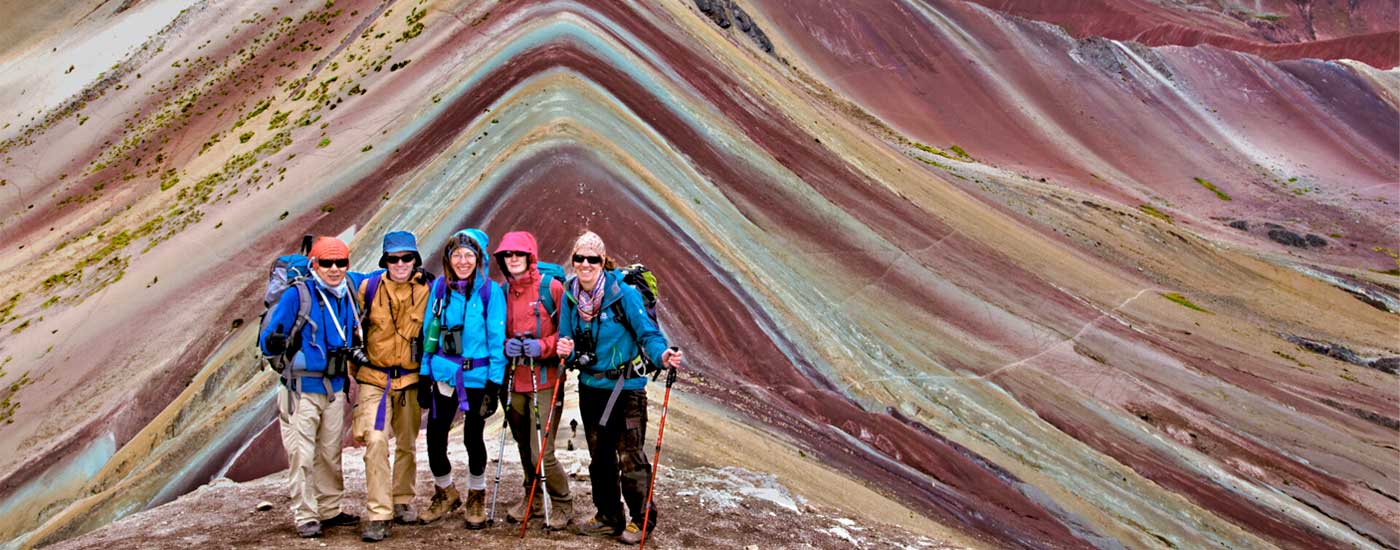
The Rainbow Mountain, also known as Vinicunca, is one of the most spectacular destinations in Peru, famous for its stripes of natural colors. However, its beauty comes with a challenge: a demanding hike that varies in difficulty depending on the route you choose. If you are planning to visit Vinicunca, it is important to know the difficulty of the hike, the altitude, the weather conditions and the route options available to make the best decision and enjoy the experience to the fullest. In this complete guide, we’ll explain everything you need to know about the Rainbow Mountain trek difficulty. We’ll cover the distance, altitude, how hard the hike is, and tips to help you decide if it’s right for you.
[ez-toc]
Difficulty of the Rainbow Mountain Hike
Short answer: It is moderately difficult to difficult.
The biggest challenge is not the hike itself, but the high altitude. Even people in good physical condition can have difficulty due to the thin air.
Why is it so challenging?
- High altitude: Most people experience shortness of breath at 4,000 meters (13,123 feet). Rainbow Mountain is over 5,000 meters high (17,060 feet), where the air has much less oxygen..
- Cold weather: It is often cold, windy, and sometimes it snows.
- Steep sections: Some sections are steep, especially near the summit.
Rainbow Mountain Trek Difficulty Level: A Detailed Description
Let’s take a look at the different sections of the trek so you can better assess the difficulty level.
Distance of the hike to Rainbow Mountain
- Total distance: 7 kilometers (4.3 miles)
- Hiking time: between 2 and 3 hours in total (1.5 hours uphill, 1 hour downhill for most people)
Elevation Gain
- Starting point: 4,600 meters (15,091 feet)
- Rainbow Mountain summit: 5,200 meters (17,060 feet)
- Elevation gain: 600 meters (1,968 feet)
This means that most of the route is uphill, and the thin air could make it even more difficult.
Is the hike to Rainbow Mountain suitable for beginners?
This is a frequently asked question. The answer depends on your physical condition and how well you tolerate altitude.
Recommended if:
- You are in good health.
- You have some hiking experience.
- You have acclimatized to the altitude in Cusco for at least 2 days before the excursion.
Not recommended if:
- You have heart or lung problems.
- You have never hiked at high altitude.
- You are coming directly from low-altitude areas without prior acclimatization.
How to reduce the difficulty of the hike to Rainbow Mountain:
1. Spend a few days in Cusco first
Stay at least two days in Cusco before the Rainbow Mountain tour. This will give your body time to adjust to the altitude.
2. Go slowly
Walk at a slow pace. Don’t rush. Take breaks when you think you need them.
3. Drink water
Stay hydrated. This helps reduce altitude sickness symptoms.
4. Take altitude sickness pills
Many travelers use pills for altitude sickness. Consult your doctor first.
5. Use a horse
You can rent a horse for part of the journey. This is useful if you feel too tired to walk. Just keep in mind that if you take a horse, the horse will only take you most of the way, not to the top.
Rainbow Mountain Weather: Another Factor in Difficulty
The weather can make the hike to Rainbow Mountain easier or more difficult. The weather at Rainbow Mountain can change quickly: from bright sunshine to snow in just a few minutes. For a complete breakdown of temperatures, wind, and the best time to visit, check out our comprehensive guide to the weather at Rainbow Mountain.
The best time to hike Rainbow Mountain:
- Dry season: May to September.
- Less rain, clearer skies, and better trail conditions.
Avoid the rainy season:
- November to March is the rainy season.
- The trails become muddy and slippery.
- There is a possibility of snowfall, which can block the trail.
How Rainbow Mountain Difficulty Compares to Other Hikes
Rainbow Mountain is the highest of the three hikes, reaching 5,200 m (17,060 ft), but it’s a short, one-day trek. The Classic Inca Trail is lower in altitude (4,200 m / 13,779 ft) but much more challenging. Humantay Lake offers a moderate hike at a similar altitude to the Inca Trail, but it’s also a day hike, making it more accessible.
Here’s a quick comparison of altitude and difficulty:

Summary of Rainbow Mountain Hike Difficulty
Difficulty: Level Moderate to Hard
Main Challenge: High altitude (5,200 meters / 17,060 feet)
Distance: 7 km / 4.3 miles
Elevation Gain: 600 meters / 1,968 feet
Time Needed: 2 to 3 hours
Best Season: Dry season (May to September)
Rainbow Mountain Altitude Sickness: The Real Challenge
Most people think the Rainbow Mountain hike difficulty lies in the trail. But the real challenge is the altitude.
What Is Altitude Sickness?
At high elevations, your body gets less oxygen. This can cause:
- Headache
- Dizziness
- Nausea
- Shortness of breath
- Fatigue
Conclusion: Is the hike to Rainbow Mountain difficult?
The hike to Rainbow Mountain is a challenging but rewarding experience. Although it is not a long or technical trail, the high altitude (5,200 meters / 17,060 feet) makes it much more difficult than expected, especially for those who are not used to hiking at high altitudes.
Compared to other popular routes in Peru, such as the Inca Trail, Rainbow Mountain is shorter and can be completed in a day, but the extreme altitude is its biggest obstacle.
With proper preparation (acclimatization, slow pace, hydration, and optional horse support), most travelers in good physical condition can complete it safely and enjoy one of the most unique views in the Andes.
If you are looking for an unforgettable high-altitude adventure, Rainbow Mountain is definitely worth the effort.
Ready to experience it for yourself? Discover our Rainbow Mountain private tour from Cusco and enjoy the hike at your own pace, with expert local guides and no crowds.
Questions and Answers
Rainbow Mountain is considered moderate to hard specially because of the high eleavtion (5,200 m / 17,060 ft), not the trail itself. Most people feel tired and short of breath.
The hike usually takes 3 hours round trip, depending on your pace and how well you are feeling with the altitude.
The trail is about 7 kilometers (4.3 miles) round trip, with an elevation gain of around 600 meters (1,968 feet).
Yes, but it’s important to acclimate in Cusco first. The trail is not technical, but the altitude makes it tough for beginners.
The final stretch before reaching the summit is the steepest and hardest of the hike where the air is very thin
It depends. Rainbow Mountain is shorter compared to Humantay Lake, it’s similar in difficulty, but Rainbow Mountain is higher and usually colder and windier.
- Stay in Cusco 2 days before the hike to adjust to the altitude.
- Drink lots of water.
- Chew coca leaves or take altitude pills if needed.
- You can also rent a horse to save energy.