
Quick Answer
April is one of the best months to visit Peru. It marks the transition from the rainy season to the dry season, with pleasant temperatures, sunny days, and fewer tourists. Perfect for visiting Machu Picchu, the Sacred Valley, Cusco, Arequipa and more.
The Andean town of Ollantaytambo stands as one of the most compelling intersections of ancient civilizations and living heritage in South America. Often recognized as a gateway to Machu Picchu, Ollantaytambo is far more than a transit stop—it is a layered historical landscape whose origins stretch back thousands of years, long before the rise of the Inca Empire.
Archaeological and historical interpretations suggest that human occupation in this area may date back as far as 3,500 years. This places Ollantaytambo within a broader continuum of Andean development, where early societies adapted to mountainous terrain through agricultural innovation, terracing, and water management. While the Incas are most closely associated with the site today, evidence indicates that earlier cultures had already established a significant presence in the region.
[ez-toc]
One of the most notable pre-Inca influences is the Huari civilization, also known as the Wari. Flourishing between approximately 600 and 1000 AD, the Huari civilization was among the first expansive state societies in the Andes. Their influence extended across much of present-day Peru, and traces of their settlements have been identified in and around Ollantaytambo. These early inhabitants contributed to the foundations of urban planning and agricultural systems that would later be refined by the Incas.
Central to the strategic importance of Ollantaytambo was the fortress of Pumamarca. This military and administrative outpost played a critical role in controlling access routes through the Sacred Valley. Its elevated position allowed for surveillance and defense, making it a key stronghold in the region. Long before the Incas consolidated their empire, Pumamarca functioned as a checkpoint that regulated movement, trade, and access into the valley.
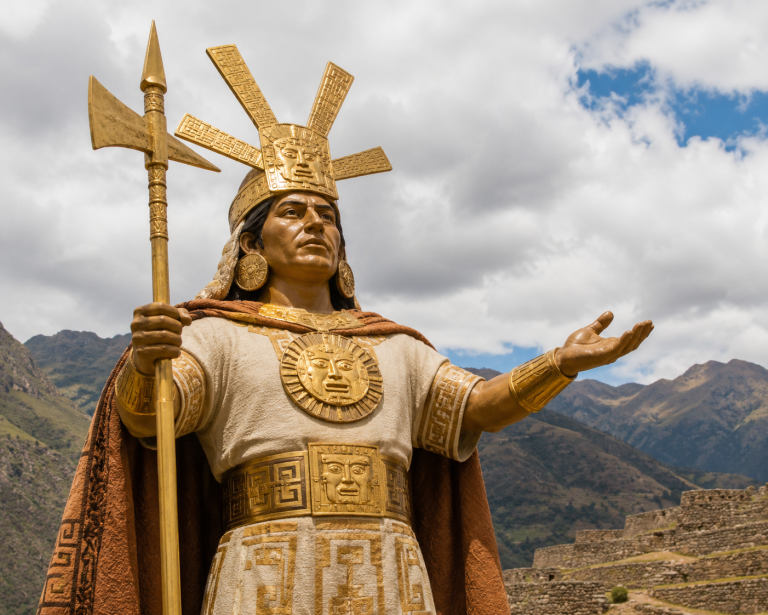
When the Incas emerged as a dominant power in the mid-15th century under rulers like Pachacuti, they recognized the strategic and agricultural value of Ollantaytambo. Rather than building from scratch, the Incas expanded upon the existing infrastructure left by earlier cultures. They transformed the area into a royal estate, complete with ceremonial centers, advanced irrigation systems, and the iconic terraces that still define the landscape today.
Ollantaytambo’s urban design is particularly noteworthy. Unlike many other archaeological sites, the town has remained continuously inhabited since Inca times. Its narrow cobblestone streets, original water channels, and stone walls are not just remnants—they are part of daily life for its current residents. This continuity offers a rare glimpse into how Inca urban planning functioned in practice, blending residential, agricultural, and ceremonial spaces into a cohesive whole.
The site also holds historical significance as a center of resistance. During the Spanish conquest in the 16th century, Ollantaytambo became a stronghold for Manco Inca, who led a rebellion against the conquistadors. The surrounding terraces and steep topography provided natural defenses, allowing Inca forces to temporarily repel Spanish advances. Although the resistance was ultimately unsuccessful, this episode underscores the enduring strategic value of the area.
Beyond its military and political roles, Ollantaytambo is a testament to Andean engineering and cosmology. The terraces were not only used for agriculture but also served to stabilize the land and manage water flow. The Incas demonstrated a sophisticated understanding of microclimates, enabling them to cultivate a variety of crops at different elevations. Meanwhile, the alignment of certain structures suggests astronomical significance, reflecting the integration of science and spirituality in Inca culture.
Ollantaytambo Today: Living Heritage, Cultural Continuity, and Gateway to the Andes
Today, Ollantaytambo continues to captivate visitors from around the world. Its dual identity as both an archaeological site and a living town makes it unique among Peru’s tourism destinations. Travelers can walk through ancient streets, observe traditional practices, and explore nearby ruins—all within a single visit. The site also serves as a starting point for treks and train journeys deeper into the Andes, reinforcing its role as a cultural and logistical hub.
In understanding Ollantaytambo, it is essential to look beyond the Inca narrative and recognize the deeper historical layers that shaped it. From early human settlements to the influence of the Huari civilization and the strategic importance of Pumamarca, the site embodies a continuum of adaptation, innovation, and resilience. The Incas may have elevated Ollantaytambo to prominence, but its story began long before—and continues to evolve today.
For those interested in Peru’s rich past, Ollantaytambo offers more than scenic beauty. It provides context, continuity, and a tangible connection to civilizations that mastered one of the world’s most challenging environments.
Questions and Answers
It represents a unique blend of pre-Inca foundations and Inca development, showing continuous human occupation for thousands of years.
The Huari were among the first to establish structured settlements in the area, influencing urban planning and agricultural systems later used by the Incas.
Under rulers like Pachacuti, the Incas expanded it into a royal estate with advanced irrigation, terraces, and ceremonial centers.
Its elevated terraces and surrounding topography provided natural defenses, allowing Manco Inca to successfully resist Spanish forces for a time.
It highlights advanced engineering, agricultural innovation, and possible astronomical alignment, reflecting a deep understanding of nature and cosmology.