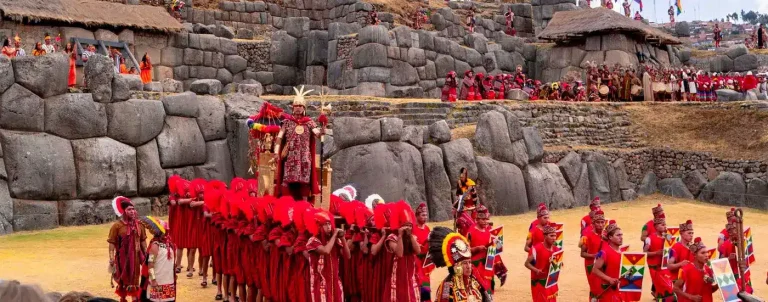

Pachacútec is recognized by historians as one of the most influential rulers of the pre-Hispanic Andean world. He was the ninth sovereign of the Inca Empire and played a decisive role in transforming a small regional kingdom into a vast empire. His reign marked a period of political reorganization, territorial expansion, and urban development that transcended the history of the Andes.
The historical sources that describe his life come mainly from colonial chronicles written in the 16th and 17th centuries by authors such as Pedro Cieza de León, Juan de Betanzos, and Inca Garcilaso de la Vega. Although these accounts differ in some details, they agree in identifying Pachacútec as the ruler who consolidated the foundations of the Inca Empire, known as Tahuantinsuyo.
[ez-toc]
Who was Pachacutec?
Pachacútec, whose full name was Pachacútec Inca Yupanqui, was born in the 15th century in the city of Cusco. According to colonial chronicles, he was the son of the ruler Viracocha Inca. His name in Quechua is usually interpreted as “he who transforms the world” or “he who changes the order of things,” an expression that reflects the symbolic dimension that historical tradition attributes to his figure.
According to historical accounts, Pachacútec played a decisive role during a military crisis faced by the Inca kingdom in the 15th century. At that time, the territory was attacked by the Chancas, a warrior culture that threatened the city of Cusco. The chronicles recount that the then prince organized the defense of the territory and managed to defeat the invaders. After this episode, he was recognized as a leader and later assumed power as sovereign.
Although the exact chronology of his reign varies according to sources, most research places his reign between approximately 1438 and 1471. During this period, the Inca state ceased to be a regional entity and became a political system with greater territorial reach.
Role in the Inca empire
The reign of Pachacútec represents a key moment in the formation of the empire. Under his leadership, the Inca state undertook a territorial expansion that incorporated various peoples and regions of the central Andes. This process gave rise to the Tahuantinsuyo, a political structure that came to encompass territories in present-day Peru, Bolivia, Ecuador, Chile, and Argentina.
Historical research indicates that Pachacútec not only promoted military campaigns, but also implemented administrative reforms. These measures allowed different ethnic groups to be integrated into a centralized political system. The territorial organization of the empire was structured into four regions or suyos, which were connected to the capital through a network of roads.
One of the most notable infrastructures of this period was the road system known as Qhapaq Ñan. This network connected vast Andean territories through routes that crossed mountains, valleys, and desert areas. Archaeological research indicates that the system facilitated transportation, communication, and administration of the empire.
Pachacútec also promoted urban reorganization projects in Cusco. The city was transformed into a political and ceremonial center with a layout that responded to symbolic and administrative principles.
Cultural legacy and heritage
Pachacútec’s legacy is linked to the consolidation of Inca power and the creation of political structures that continued to function during subsequent governments. His successors, including Túpac Inca Yupanqui and Huayna Cápac, continued the process of territorial expansion and strengthened the inherited administrative system.
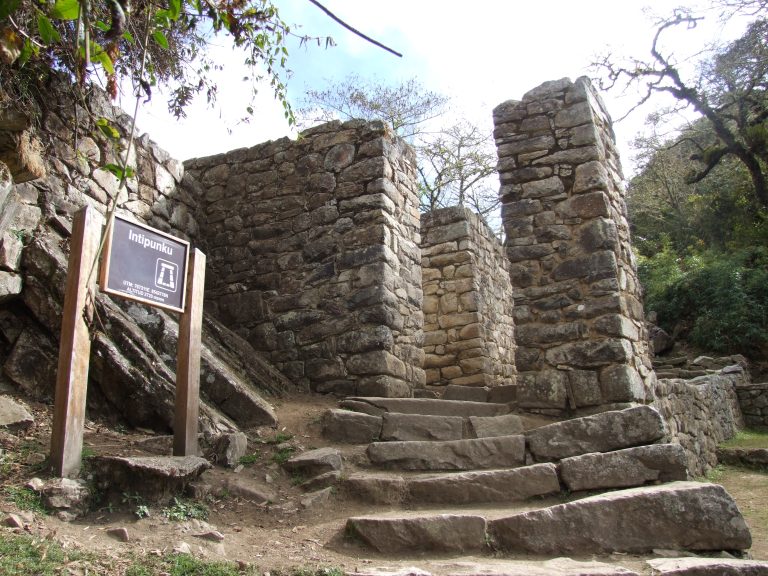
One of the architectural projects associated with his government is Machu Picchu. Various archaeological studies attribute the construction of this citadel to the period of Pachacútec. The complex is located in a mountainous area of the Cusco region and features agricultural terraces, temples, plazas, and stone buildings that reflect advanced Andean engineering techniques.
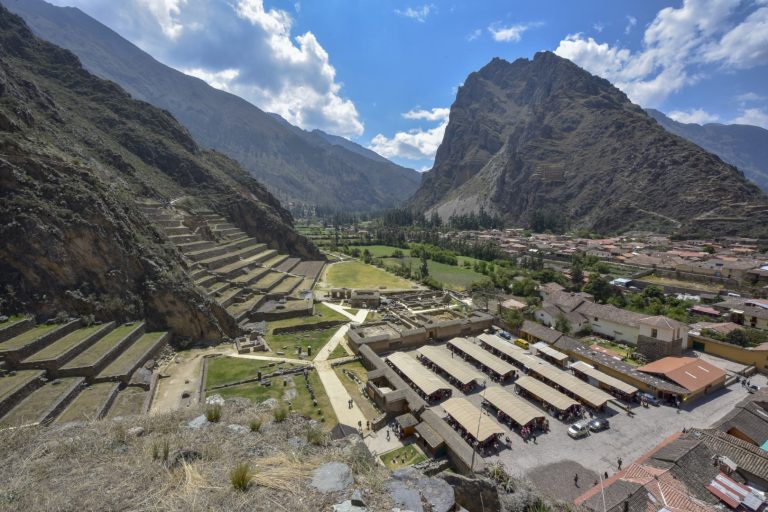
The development of administrative centers, roads, and agricultural systems is also part of this ruler’s legacy. Remains of agricultural terraces, storage depots, and urban structures reflecting the state planning of the period have been identified in several regions of the ancient empire.
After the Spanish conquest in the 16th century, many of these structures continued to be used or were adapted to new forms of territorial organization. However, archaeological remains and colonial chronicles allow us to reconstruct the magnitude of the transformations promoted during Pachacútec’s reign.
Cultural recognition
The figure of Pachacútec occupies an important place in the historical memory of the Andean world. His name appears in historical accounts, oral traditions, and academic studies dedicated to the pre-Hispanic period. For Peruvian historiography, his reign represents the moment of greatest consolidation of the Inca state.
Today, his figure is present in various cultural and educational spaces. Museums, university research, and historical dissemination programs analyze his role in the political development of the pre-Hispanic Andes. Likewise, his name is used to designate public spaces, monuments, and cultural projects in different cities throughout Peru.
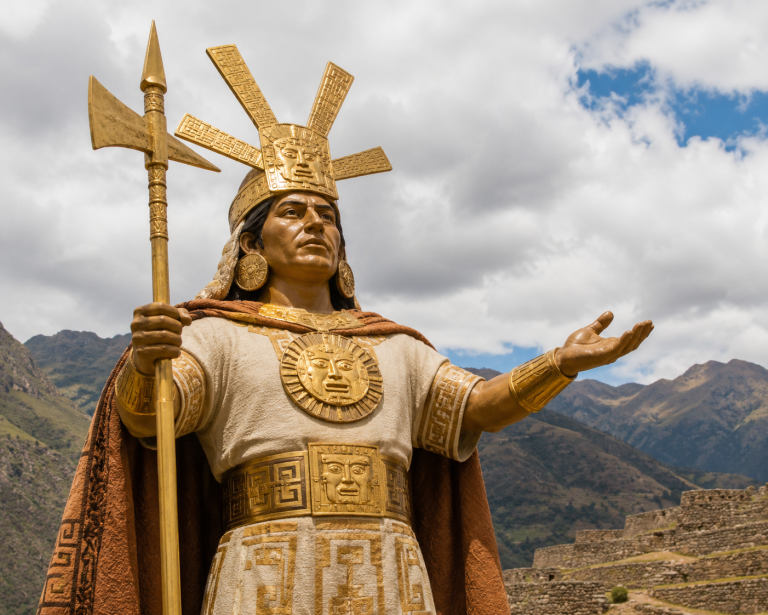
In the city of Cusco, for example, there is a sculpture dedicated to Pachacútec that forms part of the contemporary urban landscape. This type of representation reflects the historical recognition that Peruvian society gives to figures linked to the pre-Hispanic past.
From a historical perspective, Pachacútec symbolizes a period of political reorganization and territorial expansion in the Andes. The administrative structure he consolidated allowed for the integration of various peoples into a state system that lasted until the arrival of the Spanish conquistadors in the 16th century.
Questions and Answers
Pachacútec Inca Yupanqui was the ninth ruler of the Inca state and is widely recognized as one of the most influential leaders of the pre-Hispanic Andes. Historians attribute to him the transformation of a small regional kingdom in Cusco into the vast Inca Empire, known as Tahuantinsuyo. During his reign in the 15th century, he led military campaigns, reorganized the political structure of the state, and established administrative systems that allowed the empire to expand across large areas of South America.
Pachacútec was responsible for initiating the territorial expansion that shaped the Inca Empire. Through military strategy and political organization, he incorporated numerous Andean societies into a centralized state. This expansion created a complex system that eventually included territories in present-day Peru, Bolivia, Ecuador, Chile, and Argentina, laying the foundations for one of the largest empires in pre-Columbian America.
Many archaeological studies associate the construction of Machu Picchu with the period of Pachacútec’s rule. Scholars believe the citadel may have been built as a royal estate or ceremonial center linked to his government. Its sophisticated architecture, agricultural terraces, and urban design reflect the advanced engineering and planning developed during the height of the Inca Empire.
Pachacútec implemented major administrative reforms that helped organize the rapidly expanding empire. One of the most significant changes was the division of the territory into four regions known as suyos. These regions were connected to the capital city of Cusco through a vast network of roads called the Qhapaq Ñan. This system facilitated communication, transportation, and governance across the Andean territories.
Pachacútec continues to be an important historical figure in Peru because his leadership marked the consolidation of the Inca state and the development of many cultural and political structures of the Andean world. His legacy is preserved through archaeological sites, historical studies, museums, and monuments, especially in the city of Cusco. Today, his story remains a key part of understanding the origins of the Inca civilization and the cultural heritage explored by travelers visiting Peru.