Inti Punku: The Sun Gate of Machu Picchu, History, Views and Hiking Guide
High above the cloud forest of the Peruvian Andes, Inti Punku, also known as the Sun Gate, offers one of the most remarkable perspectives of Machu Picchu. At approximately 2,745 meters (9,006 feet) above sea level, this ancient stone gateway marks the historic entrance through which travelers approaching along the Inca Trail would have encountered the legendary Inca city.
For centuries, Inti Punku served as more than a passage through the mountains. Its position overlooking the surrounding valleys allowed the Incas to control access to Machu Picchu while creating a meaningful connection between the road network, the landscape and the sacred city.
Today, the Sun Gate remains a memorable destination for hikers. From its stone terraces, visitors can admire the archaeological complex of Machu Picchu, the winding Urubamba River, the dramatic silhouette of Huayna Picchu and the green mountains of the cloud forest.
Whether you arrive after several days on the Inca Trail or hike uphill from Machu Picchu, Inti Punku offers something particularly special: the opportunity to understand how the Incas approached their city and how its architecture was integrated into the surrounding mountains.
[ez-toc]
What Is Inti Punku? The Meaning of the Sun Gate
The name Inti Punku comes from Quechua, the language of the Incas and one of the indigenous languages still spoken throughout the Peruvian Andes.
- Inti: Sun.
- Punku: Door or gate.
Together, these words translate to “Sun Gate.”
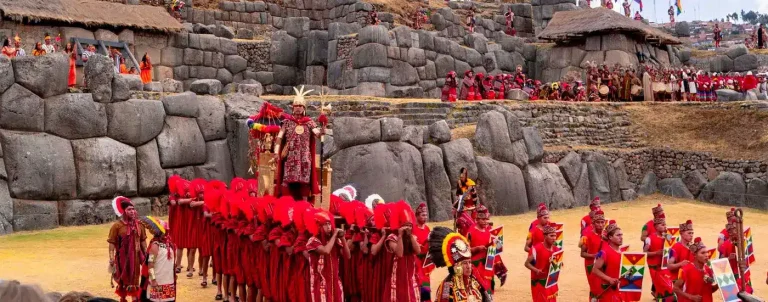
The name reflects the importance of the sun in Inca culture. Inti was a central deity in the Inca religious tradition, and the ruling dynasty traced its legitimacy to a sacred relationship with the sun.
Solar observations influenced Inca ceremonies, agricultural activities and the organization of sacred spaces. Temples, mountains, stones and architectural features could acquire spiritual significance through their relationship with celestial events.
Inti Punku belongs to this broader cultural landscape, although its most clearly recognizable historical function was as a gateway and access-control point on the road leading into Machu Picchu.
Where Is Inti Punku Located?
Inti Punku stands on a mountain ridge southeast of Machu Picchu, along the final section of the historic Inca Trail.
The gateway is located approximately 1.7 kilometers (1.1 miles) from the archaeological complex, following the designated hiking route.
Its elevated position creates a natural observation point over the Inca city and the surrounding mountains.
Inti Punku Altitude and Hiking Facts
| Feature | Information |
|---|---|
| Altitude | Approximately 2,745 m / 9,006 ft |
| Location | Southeast of Machu Picchu, Cusco, Peru |
| Distance from Machu Picchu | Approximately 1.7 km each way |
| Round-trip distance | Approximately 3.4 km |
| Walking time | Approximately 45–75 minutes uphill |
| Suggested hiking time | Allow around 2–3 hours for the return hike and photographs |
| Difficulty | Moderate, with uphill sections and uneven stone steps |
| Official Machu Picchu route | Circuit 1, Route 1-C: Intipunku Gate |
For comparison, the archaeological city of Machu Picchu stands at approximately 2,430 meters (7,972 feet). Inti Punku is therefore more than 300 meters higher than the city itself.
The hike may feel more demanding than its distance suggests because of the altitude, uphill sections and exposure to the sun.
The Historical Significance of Inti Punku
To understand the importance of Inti Punku, it is necessary to imagine Machu Picchu before the construction of modern roads, railways and tourist facilities.
The city was connected to the wider Inca world through an extensive network of roads that crossed mountains, valleys and different ecological regions.
Inti Punku occupied a strategic position along one of the principal approaches to the settlement.
1. The Main Entrance to Machu Picchu
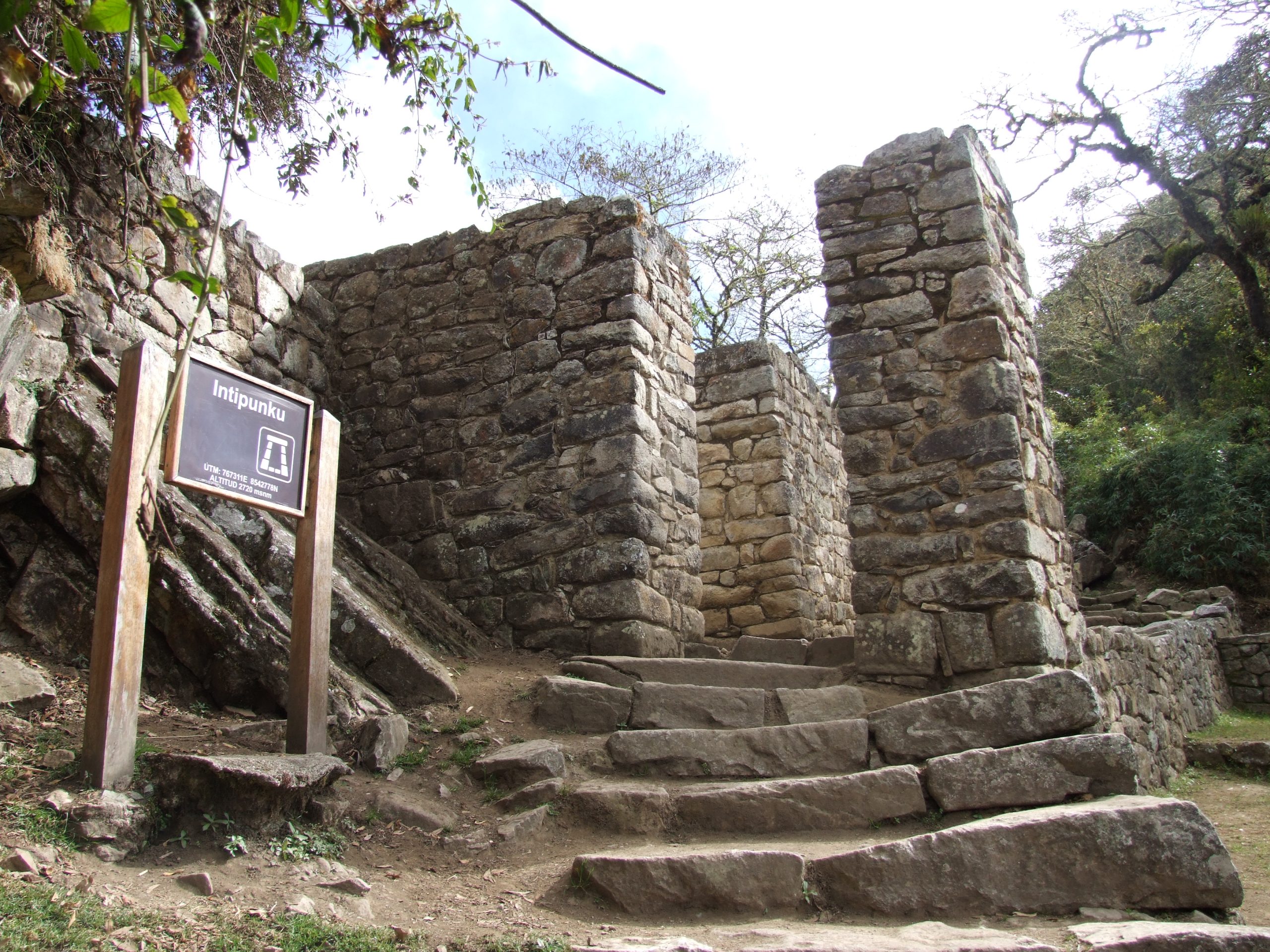
During the Inca period, travelers approaching Machu Picchu along the eastern section of the Inca road network passed through Inti Punku before descending toward the city.
The gateway marked a physical transition from the mountain trail to the monumental settlement.
Unlike today’s visitors, who generally arrive by bus from Aguas Calientes, ancient travelers would have approached Machu Picchu on foot through an environment shaped by steep terrain and dense vegetation.
Their arrival at Inti Punku would have revealed the city’s location within the mountains, providing a striking view of the destination they were approaching.
2. A Strategic Checkpoint
The position of Inti Punku made it suitable for observing movement along the approaching trail.
Its stone structures and restricted passage provided an opportunity to monitor travelers before they entered Machu Picchu.
According to Peru’s official tourism information, the gateway was associated with the regulation of access to the Inca city.
Such control would have been particularly relevant for a settlement connected to the political, religious and administrative organization of the Inca state.
However, the surviving archaeological evidence does not establish exactly who was permitted to enter, how frequently the gateway was guarded or whether access was exclusively reserved for the nobility.
3. A Symbolic Threshold
Inti Punku was also significant because of its position between the mountain landscape and the city.
In Inca society, certain mountains, natural formations and architectural features were regarded as sacred. Their importance extended beyond their practical functions.
The experience of passing through a stone gateway before descending toward a major Inca settlement may therefore have carried symbolic meaning.
While the precise ceremonies associated with Inti Punku remain uncertain, its location illustrates the close relationship between Inca architecture, movement through the landscape and sacred geography.
Inti Punku and the Sun: Was It an Astronomical Observatory?
One of the most interesting aspects of Inti Punku is its relationship with the sun.
Peruvian tourism accounts associate the gateway with sunlight passing through its entrance during the December solstice, which marks the beginning of astronomical summer in the Southern Hemisphere.
This interpretation reflects the importance of solar observation in Inca architecture and religious life.
However, the exact astronomical function of Inti Punku and the extent to which its orientation was deliberately designed for particular celestial events remain subjects of interpretation.
It should not be assumed that sunlight passes perfectly through the gateway at sunrise every day or that visitors will witness a specific solar alignment during their visit.
Weather conditions, surrounding mountain ridges, seasonal changes and the position of the observer all influence the appearance of the sunrise.
What remains clear is that Inti Punku offers an extraordinary place to appreciate the relationship between the Inca city, its mountain setting and the changing light of the Andes.
Inti Punku: The Final Gateway of the Inca Trail
For travelers completing the traditional Inca Trail, Inti Punku represents one of the most anticipated moments of the entire journey.
The classic four-day Inca Trail begins near Piscacucho, at kilometer 82 of the railway between Cusco and Machu Picchu.
Over approximately 43 kilometers, hikers cross high mountain passes, ancient stone staircases and archaeological sites before reaching Machu Picchu.
The route passes through changing landscapes, from high-altitude Andean terrain to lush cloud forest.
Among its archaeological highlights are Llactapata, Runkurakay, Sayacmarca, Phuyupatamarca and Wiñay Wayna.
The Last Stretch from Wiñay Wayna
After leaving the archaeological complex of Wiñay Wayna, hikers continue along the final section of the Inca Trail toward Inti Punku.
This section passes through dense vegetation and follows original stone pathways built into the mountain.
Near the gateway, hikers encounter a steep section of stone steps that adds a final physical challenge before reaching the viewpoint.
After completing these steps, the trail reaches Inti Punku, where Machu Picchu finally appears in the distance.
For many travelers, this is the defining moment of the trek: after days of walking through valleys and mountains, the destination becomes visible.
Important: Inti Punku is not technically the absolute end of the Inca Trail. It is the final historic gateway before the descent into Machu Picchu. Hikers must continue downhill from the Sun Gate to reach the archaeological complex.
Can You Reach Inti Punku Without Hiking the Full Inca Trail?
Yes. Visitors do not need to complete the traditional four-day trek to experience the Sun Gate.
There are two main ways to reach it:
- Via the Inca Trail: Reach Inti Punku as part of an authorized Inca Trail itinerary, including the classic multi-day route or shorter permitted alternatives.
- From Machu Picchu: Follow the designated Route 1-C uphill from the archaeological complex when this route is officially open.
Each option has different ticketing requirements. A standard Machu Picchu entrance ticket does not automatically authorize visitors to hike the Inca Trail or access Inti Punku.
What Can You See from Inti Punku?
The main attraction of Inti Punku is its panoramic viewpoint. From this elevated location, travelers can observe how Machu Picchu fits into the surrounding geography.
The experience differs from the familiar postcard view because the Sun Gate reveals the city from farther away and from the direction of the historic Inca Trail.
1. A Panoramic View of Machu Picchu
The most recognizable feature is the ancient Inca city itself.
From the Sun Gate, the agricultural terraces, stone buildings and surrounding mountain slopes appear together within a single landscape.
The city’s position becomes particularly impressive from this distance. Rather than appearing as an isolated archaeological monument, Machu Picchu seems integrated into the mountain ridge on which it was constructed.
The viewpoint also helps visitors appreciate the extensive engineering required to build and maintain a settlement in such challenging terrain.
2. Huayna Picchu Mountain
Behind the archaeological city rises Huayna Picchu, the steep mountain that forms the recognizable background of many photographs of Machu Picchu.
From Inti Punku, its distinctive silhouette contrasts with the lower terraces and buildings of the settlement.
On clear days, the mountain creates a dramatic backdrop for panoramic photographs.
Visitors can also appreciate the difference between Huayna Picchu and Machu Picchu Mountain, which occupies a separate position on the opposite side of the archaeological complex.
3. The Urubamba River and Its Valley
Far below the Sun Gate, the Urubamba River winds through the deep valley surrounding Machu Picchu.
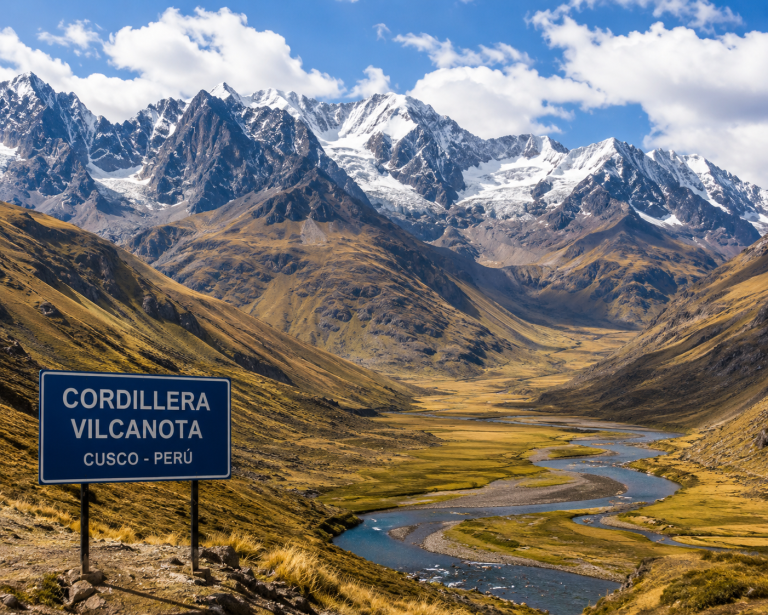
Also known as the Vilcanota River in parts of its course, it forms an important geographical feature of the region.
From the viewpoint, visitors can observe the remarkable difference in elevation between the river valley and the surrounding mountains.
The river also helps explain the isolated appearance of Machu Picchu, which occupies a ridge enclosed by steep valleys and dramatic mountain formations.
4. Aguas Calientes and the Surrounding Mountains
Depending on visibility and your position at the viewpoint, you may distinguish parts of Machu Picchu Pueblo, commonly known as Aguas Calientes, within the valley.
The surrounding peaks and forest-covered slopes extend across the horizon, creating a landscape that feels far larger than the archaeological site itself.
This perspective provides a sense of the difficult terrain that the Incas had to overcome when constructing their roads.
5. The Original Inca Trail
One of the most historically interesting views is the ancient path itself.
From Inti Punku, visitors can observe sections of the stone pathway that descend toward Machu Picchu.
The trail demonstrates how Inca engineers adapted their construction techniques to the mountain terrain, using steps, retaining walls and carefully positioned passages.
Looking down the route also helps explain why the Sun Gate was such an effective location for monitoring travelers approaching the city.
6. Cloud Forest and Mountain Wildlife
Inti Punku lies within the Historic Sanctuary of Machu Picchu, a protected landscape where Andean and Amazonian environments meet.
The surrounding vegetation includes ferns, mosses, orchids and other plants adapted to humid mountain conditions.
Birds and butterflies may be observed along the route, particularly when hiking quietly.
Wildlife sightings are unpredictable, and visitors should never approach or feed animals.
How to Take Beautiful Photos at Inti Punku
Inti Punku is a wonderful location for landscape photography, portraits and photographs that capture the experience of completing the Inca Trail.
However, the best photographs require some planning. Light, weather, composition and the position of the photographer can make a considerable difference.
1. Use the Ancient Gateway to Frame Machu Picchu
One of the most distinctive compositions is to photograph Machu Picchu through the opening of Inti Punku.
Position yourself at a safe location along the designated path and use the stone walls to create a natural frame around the distant city.
This composition connects two important elements in one photograph: the historic entrance and the destination it leads toward.
Try taking both horizontal and vertical photographs. Horizontal images work well for capturing the surrounding landscape, while vertical photographs emphasize the height of the gateway.
2. Take a Photograph with Machu Picchu in the Background
For a memorable travel portrait, ask your companion or guide to stand at a safe distance and photograph you with the archaeological city in the background.
Avoid standing too close to the camera, as this can make the city appear very small.
Instead, position yourself slightly to one side of the image, leaving enough space for Machu Picchu and Huayna Picchu to remain visible.
This creates a balanced composition and preserves the sense of scale.
3. Capture the Trail Leading Toward the City
Photographs of the original Inca Trail can be just as interesting as photographs of Machu Picchu itself.
Look for a composition that includes the stone steps or pathway in the foreground, leading the viewer’s eye toward the distant city.
This type of image tells the story of the journey rather than simply documenting the destination.
It is particularly meaningful for travelers who have completed a multi-day trek.
4. Use Natural Light to Your Advantage
Morning light can create attractive contrasts between the mountains and the surrounding valleys.
During the early part of the day, clouds and mist may also produce interesting layers in the landscape.
However, an early arrival does not guarantee sunshine or clear views.
If Machu Picchu is partially hidden by clouds, consider taking photographs of the changing scenery rather than waiting for a perfectly clear panorama.
The movement of mist across the mountains can create beautiful atmospheric images.
Never delay your departure beyond the permitted visiting time to wait for better weather.
5. Use Your Phone’s Wide-Angle Camera
Modern smartphones are suitable for photographing Inti Punku.
Use the standard camera for portraits and the wide-angle lens when you want to include more of the surrounding landscape.
If your phone has a panoramic photography mode, you can also use it to capture the mountains and the Inca city in one image.
Keep the horizon level and move the camera slowly to reduce distortion.
Avoid excessive digital zoom, which can reduce image quality.
6. Do Not Use Drones, Tripods or Selfie Sticks
Personal photography is generally permitted along authorized visitor routes, but Machu Picchu has strict rules designed to protect the monument and maintain visitor safety.
Tripods, monopods, selfie sticks and similar camera extensions are prohibited. Drone flights are also prohibited.
Do not climb, lean against or sit on archaeological walls to obtain a better photograph.
Stay on designated paths and avoid blocking narrow passages while taking pictures.
Commercial or advertising photography is subject to additional restrictions and may require authorization.
How Difficult Is the Hike from Machu Picchu to Inti Punku?
The hike is generally considered moderately challenging.
It is significantly shorter than the traditional Inca Trail, but it still requires walking uphill on uneven surfaces at an altitude of approximately 2,400–2,745 meters.
The trail includes stone steps, exposed sections and a steady ascent.
For visitors with reasonable physical fitness, the uphill walk usually takes approximately 45–75 minutes, although the actual time varies considerably.
Allow approximately two to three hours for the return hike, including short stops and photographs.
Visitors should also account for the time needed to follow the authorized route within the archaeological complex.
Is Inti Punku Suitable for Beginners?
Many visitors without extensive trekking experience can complete the hike, provided they are comfortable walking uphill and navigating uneven stone paths.
However, the altitude, humidity and strong sunlight can make the journey more demanding than expected.
Take short breaks when necessary and maintain a comfortable pace.
Visitors with mobility limitations, significant fear of heights or health conditions affecting physical exertion should assess the route carefully before attempting it.
Best Time of Year to Visit Inti Punku
Weather plays an important role in the experience of visiting the Sun Gate.
Machu Picchu is located in a humid mountain environment where clouds and rainfall can occur at any time of year.
Dry Season: Approximately May to September
The dry season generally brings lower rainfall and more opportunities for clear mountain views.
June, July and August are popular months for trekking in the region.
However, these months also attract large numbers of travelers, so tickets and Inca Trail permits should be arranged well in advance.
Morning temperatures can be cool, while exposed sections of the trail may become warm under direct sunlight.
Rainy Season: Approximately November to March
The rainy season brings greener vegetation, frequent cloud cover and a greater possibility of wet or slippery trails.
Heavy rainfall can affect visibility and occasionally cause route restrictions.
Visitors should also remember that the traditional Inca Trail normally closes for maintenance during February.
The direct Inti Punku hiking route from Machu Picchu has its own seasonal access rules, so weather conditions alone do not determine whether it can be visited.
How to Visit Inti Punku in 2026: Tickets and Circuit 1-C
Visitors planning to reach Inti Punku from Machu Picchu must select the correct entrance ticket.
Under the current visitor management system, the Sun Gate is included in Circuit 1, Route 1-C: Intipunku Gate.
This route belongs to the Panoramic Circuit and is available only during the officially designated high season.
For 2026, Peru’s Ministry of Culture has established its main high-season period from June 19 to November 2. Visitors should confirm that Route 1-C is offered for their exact travel date, as access can also be affected by temporary restrictions or conservation measures.
The route includes the panoramic sector of Machu Picchu and the designated trail toward the Sun Gate.
The official route map specifies a maximum total visiting time of four hours.
Does the Inti Punku Ticket Include the Entire Machu Picchu Citadel?
No. Route 1-C is a panoramic itinerary that focuses on the upper viewpoints and the hike toward Inti Punku.
It does not provide the same access to the urban archaeological sector as the Classic Circuit or the Royalty Circuit.
Visitors who wish to hike to Inti Punku and also explore the principal temples and buildings inside Machu Picchu should check whether they need separate tickets.
Tickets for different circuits are subject to their own availability and scheduled entry times.
Where Can You Buy Inti Punku Tickets?
Tickets for the official Machu Picchu circuits can be purchased through the Peruvian Ministry of Culture’s reservation platform:
Official Machu Picchu Ticket Reservation Website
Select the correct date, route and entry time before completing your reservation.
Inca Trail permits are managed separately and must be arranged through an authorized tour operator.
Always verify the permitted route before purchasing train tickets or arranging transportation to Machu Picchu.
Practical Tips Before Hiking to the Sun Gate
A little preparation can make the hike more comfortable and help you enjoy the experience.
- Wear comfortable hiking shoes: Choose footwear with good traction for stone steps and uneven terrain.
- Bring a rain poncho: Weather in the cloud forest can change quickly, even during the dry season.
- Use sunscreen: UV exposure can be strong at high altitude, including on cloudy days.
- Carry drinking water: Bring a reusable bottle and stay hydrated during the hike.
- Travel light: Large backpacks are not permitted inside Machu Picchu. The official maximum bag dimensions are 40 × 35 × 20 cm.
- Bring your passport: Carry the identification document associated with your entrance reservation.
- Check your ticket time: Allow sufficient time to reach the gate and return without exceeding the permitted visiting period.
- Protect your camera: Use a small waterproof cover or protective pouch during rainy weather.
- Respect the archaeological structures: Never climb on walls, remove stones or leave the marked trail.
- Follow ranger instructions: Temporary restrictions may be introduced due to weather, maintenance or visitor safety.
Food is prohibited inside the Machu Picchu archaeological complex. Plan your meals accordingly and dispose of all waste outside the protected site in designated facilities.
Interesting Facts About Inti Punku
The Sun Gate Reveals Machu Picchu Before You Reach It
One of the defining features of Inti Punku is that it provides the first major panoramic view of Machu Picchu for hikers approaching along the traditional Inca Trail.
The city becomes visible while the final section of the trail still lies ahead.
This creates a distinctive arrival experience that differs from reaching the archaeological complex by bus.
It Was Part of a Much Larger Road Network
Inti Punku was not an isolated monument.
It formed part of the Inca road system, known as the Qhapaq Ñan, which connected settlements and administrative centers across a vast area of the Andes.
The network supported communication, transportation and the movement of people and resources throughout the Inca Empire.
It Is Higher Than Machu Picchu
Although Machu Picchu itself is already located high in the Andes, the Sun Gate stands more than 300 meters above the archaeological city.
This difference in elevation creates its distinctive viewpoint and allows visitors to observe the city within its larger geographical setting.
The Journey Is Part of the Experience
Inti Punku is not simply a destination reached at the end of a hike.
The original stone pathway, surrounding cloud forest and changing views of the mountains are essential parts of the experience.
For travelers interested in Inca history, walking this route offers a direct encounter with the engineering and geographical knowledge that made the ancient road network possible.
Frequently Asked Questions About Inti Punku
How high is Inti Punku?
Inti Punku stands at approximately 2,745 meters (9,006 feet) above sea level, making it more than 300 meters higher than the archaeological city of Machu Picchu.
How far is the Sun Gate from Machu Picchu?
The designated Route 1-C covers approximately 1.7 kilometers each way. The return hike is approximately 3.4 kilometers, although the total distance walked within the site depends on the permitted visitor route.
Can you see Machu Picchu from Inti Punku?
Yes. Inti Punku offers a panoramic view of Machu Picchu, Huayna Picchu and the surrounding mountain landscape. Visibility depends on weather conditions.
Can you visit Inti Punku without doing the Inca Trail?
Yes. Visitors can reach Inti Punku from Machu Picchu using the designated Route 1-C when it is open and when they hold a valid ticket for that route.
Is Inti Punku the end of the Inca Trail?
Inti Punku is the final historic gateway on the traditional approach to Machu Picchu. The trail continues downhill from the gateway into the archaeological complex.
Can you see the sunrise from Inti Punku?
The Sun Gate is associated with sunrise views, particularly for travelers completing the traditional Inca Trail. However, seeing the sunrise depends on your authorized itinerary, arrival time, season and weather conditions.
Visitors using Route 1-C should not assume that their entry time will allow them to reach the gateway before sunrise.
Is Inti Punku the same as the Sun Gate at Ollantaytambo?
No. Inti Punku is a Quechua name meaning Sun Gate and is used for more than one archaeological structure in the Andes.
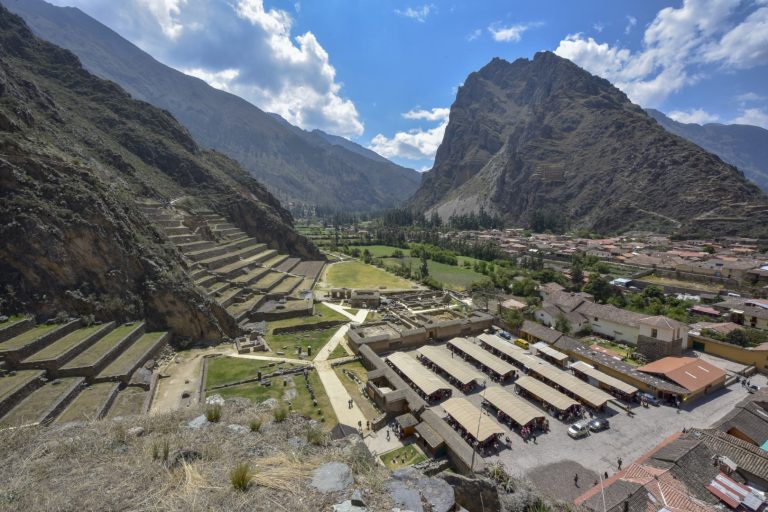
The Inti Punku described in this article is the gateway overlooking Machu Picchu, not the similarly named structure near Ollantaytambo.
Why Inti Punku Is Worth Visiting
Inti Punku offers a perspective of Machu Picchu that combines history, landscape and the experience of traveling along an ancient Inca road.
From its elevated viewpoint, the architectural complex appears surrounded by forest-covered mountains, deep valleys and the winding Urubamba River.
For Inca Trail hikers, the gateway marks the long-awaited moment when Machu Picchu finally comes into view. For visitors approaching from the archaeological city, it offers the chance to discover the historic route that once connected the settlement with the wider Inca world.
Beyond its panoramic scenery, the Sun Gate helps explain why the Incas selected this extraordinary location and how they transformed a challenging mountain environment into a connected cultural landscape.
Standing at Inti Punku, with the original Inca Trail stretching toward Machu Picchu, visitors can appreciate not only the destination but also the remarkable journey that made reaching it possible.
Official Sources and Further Reading
For updated information about entrance tickets, authorized hiking routes and visiting regulations, consult the following official resources:
- Peruvian Ministry of Culture – Machu Picchu Circuits and Routes
- Machu Picchu Official Visitor Regulations
- PROMPERÚ – Inti Punku and Its Historical Significance
- UNESCO – Historic Sanctuary of Machu Picchu
Questions and Answers
It served as a main checkpoint and observation station, helping to regulate and monitor access to the citadel.
Its elevated and narrow position allowed Inca authorities to oversee movement, making it ideal for surveillance and defense.
In Quechua, “Inti” means sun and “Punku” means gate, referring to its role and its alignment with the sunrise during key times of the year.
Its construction shows advanced stonework and alignment with celestial events, integrating natural light and astronomy into its design.
It provides a panoramic first view of Machu Picchu, especially at sunrise, making it a highlight for hikers on the Inca Trail.