Traditional textiles from the Cusco region are one of the most representative expressions of Andean culture. Since pre-Hispanic times, Andean societies have developed complex weaving techniques that have enabled them to produce garments with practical, social, and symbolic functions. In the case of Cusco, this tradition has been maintained over the centuries thanks to knowledge passed down from generation to generation within rural communities.
Textile production is part of everyday life in many Andean communities in southern Peru. Various studies conducted by cultural and academic institutions indicate that these practices preserve production methods, materials, and designs with ancient roots. Weaving not only serves a utilitarian function, but also reflects the identity of communities, their traditions, and their relationship with the natural environment.
[ez-toc]
Features and designs
Traditional textiles from Cusco are notable for their use of natural fibers and the complexity of their designs. Among the most commonly used materials are sheep’s wool, alpaca fiber, and, in some cases, vicuña fiber. These fibers are characterized by their strength and ability to adapt to the climatic conditions of the Andes mountain range.
Before weaving, the fibers undergo a process of cleaning, spinning, and dyeing. Spinning is usually done with traditional tools such as the hand spindle, a technique widely documented in anthropological studies of Andean communities. To obtain colors, many communities use natural dyes extracted from plants, minerals, and insects. One of the best-known examples is the use of cochineal to obtain intense red hues.
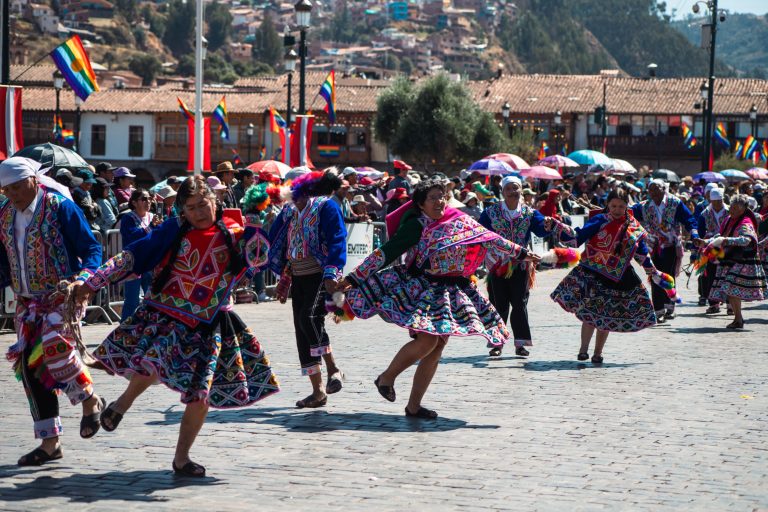
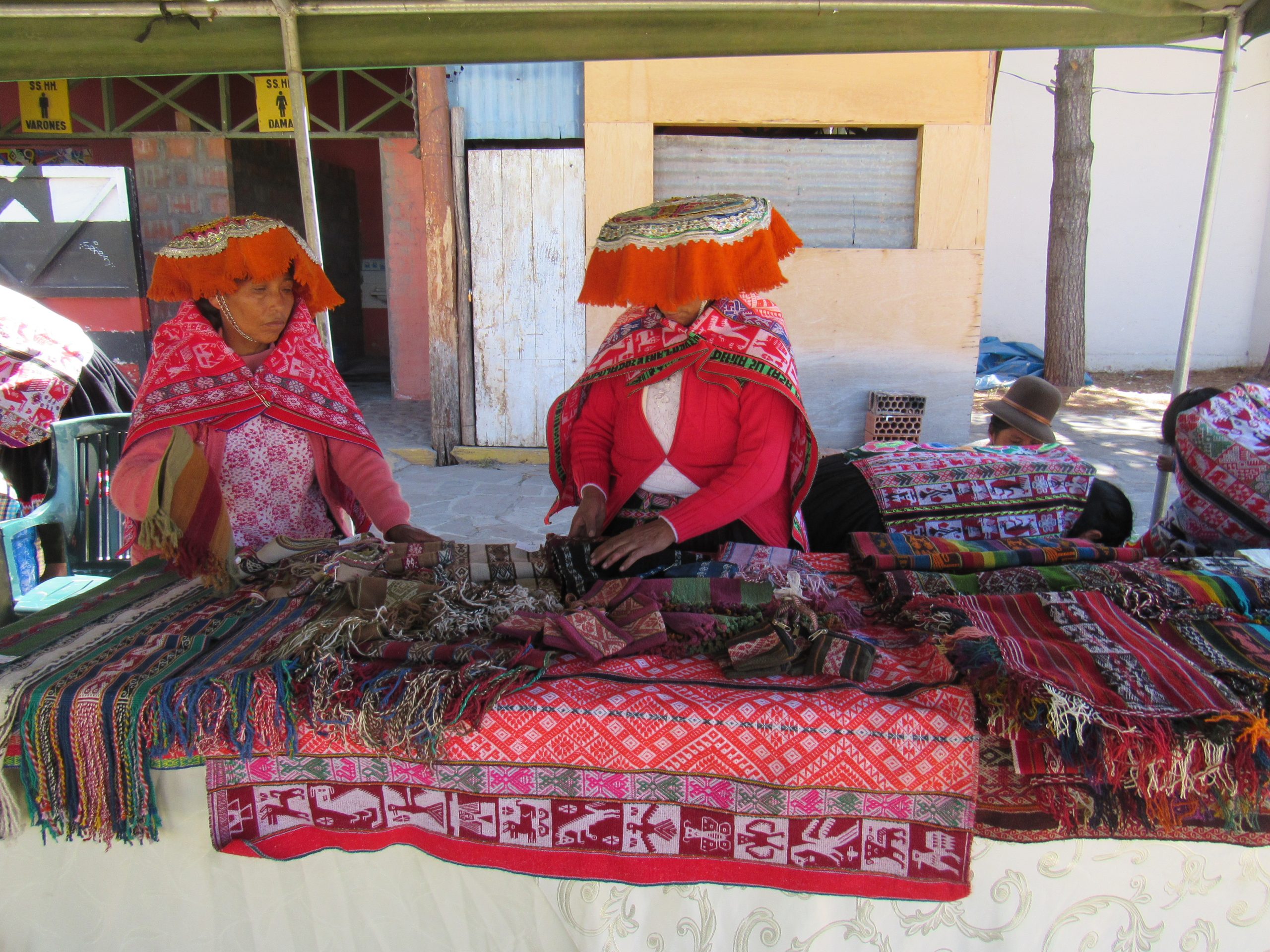
The designs found on textiles often include geometric figures, staggered lines, and stylized representations of animals or elements of the landscape. In the Andean tradition, these motifs are known as pallay, a term that refers to the decorative patterns woven into the fabrics. Ethnographic research indicates that pallay can convey information about the community of origin, the natural environment, or aspects of daily life.
In some areas of Cusco, the designs also reflect the agricultural calendar or local productive activities. Colors and shapes are combined in a particular way in each community.
What garments are they used in?
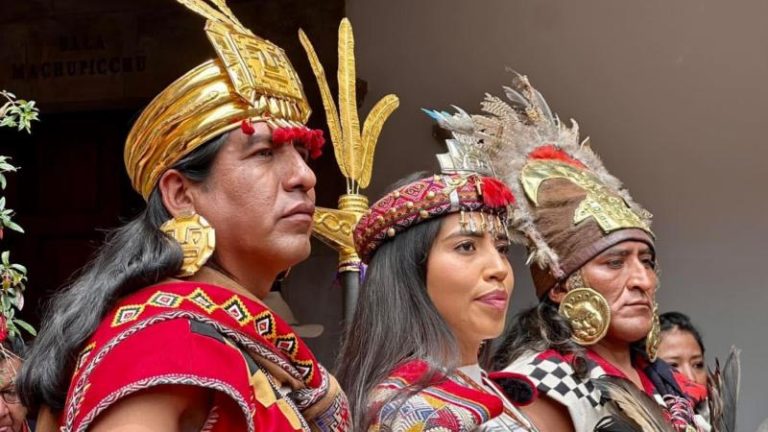
Textiles are used in a variety of traditional garments that form part of the everyday and ceremonial dress of Andean communities. Among the best known is the lliclla, a rectangular blanket that many women use to cover their shoulders or to carry objects.
Another common garment is the chullo, a knitted hat with earflaps that protects against the cold typical of high Andean areas. This type of garment appears in numerous rural communities in southern Peru and varies in design and color depending on the locality.
The fabrics are also used in the manufacture of ponchos, sashes, and traditional bags known as chuspas. The latter have been used since pre-Hispanic times to carry coca leaves or other personal items. Ponchos, meanwhile, have a practical function of protecting against the weather and have also acquired symbolic value in certain celebrations.
In addition to clothing for personal use, textiles are also used in domestic and ceremonial objects. In some cases, they are used to make blankets, tapestries, or items associated with community rituals.
Tradition and origin
The textile tradition of Cusco has deep roots in the history of Andean civilizations. Archaeological evidence shows that weaving was a highly developed activity even before the emergence of the Inca Empire. Pre-Hispanic cultures such as those that inhabited the central Andes already used looms and natural fibers to produce textiles with complex designs.
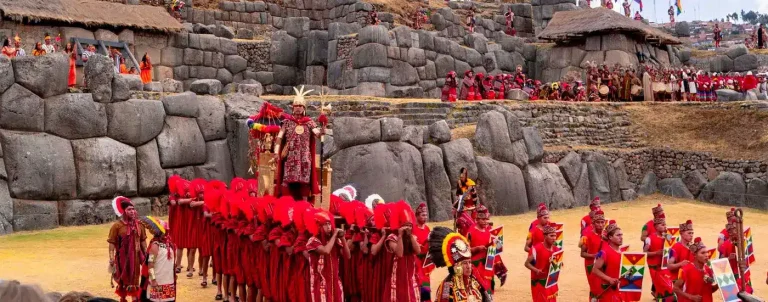
During the Inca Empire period, weaving reached a high degree of specialization. Colonial chronicles and archaeological studies indicate that there were groups dedicated exclusively to the production of fine textiles for the elite. These fabrics could be made with high-quality fibers and carefully planned designs.
Weaving also served economic and political functions within the Inca state system. Textiles were part of the goods produced through collective labor known as mita and were used in exchanges, ceremonies, and offerings. Various studies on the Andean economy indicate that textile production was a central activity in the organization of the empire.
After the arrival of the Spanish in the 16th century, many textile practices continued in rural communities. Although some materials and tools changed over time, basic techniques and traditional knowledge were passed down within families and communities.
Cultural significance, economic hub, and tourism
Today, traditional textiles from Cusco are an important part of Peru’s cultural heritage. Various cultural institutions have highlighted the importance of these practices as part of the historical legacy of Andean communities. The knowledge associated with weaving includes techniques, symbolism, and forms of social organization that have been maintained for centuries.
Textile production also plays a role in the economy of many rural communities. The production and sale of textiles provides additional income for families, especially in areas where agriculture and livestock farming remain the main productive activities.
Interest in Andean culture has made Cusco textiles visible in the tourism sector. Domestic and foreign visitors often find these garments in markets, craft fairs, and cultural centers in the region. This contact has helped to spread knowledge about ancestral techniques.
At the same time, various cultural organizations and community projects promote the preservation of these practices through training and knowledge transfer programs.
Questions and Answers
Traditional textiles from Cusco stand out for their use of natural fibers such as alpaca, sheep wool, and sometimes vicuña. They also feature intricate patterns known as pallay, which often represent elements of nature, community identity, or everyday life in the Andes.
Weavers in Cusco typically use natural fibers like alpaca, sheep wool, and vicuña. These materials are valued for their durability and ability to withstand the cold climate of the Andes. Natural dyes derived from plants, minerals, and insects such as cochineal are also commonly used.
Cusco textiles are used to create several traditional garments, including the lliclla (a shoulder blanket), chullo (a knitted hat with earflaps), ponchos, belts, and small woven bags known as chuspas. Many of these items have both practical and cultural significance in Andean communities.
The textile tradition in Cusco dates back to pre-Hispanic times, long before the rise of the Inca Empire. Archaeological and historical evidence shows that weaving was already a highly developed craft among ancient Andean societies and later became an important activity within the Inca state.
Traditional textiles are an important part of the cultural heritage of the Cusco region. They preserve ancestral weaving techniques and community traditions. Today, these textiles also play a role in the local economy and attract visitors interested in learning about Andean culture and craftsmanship.