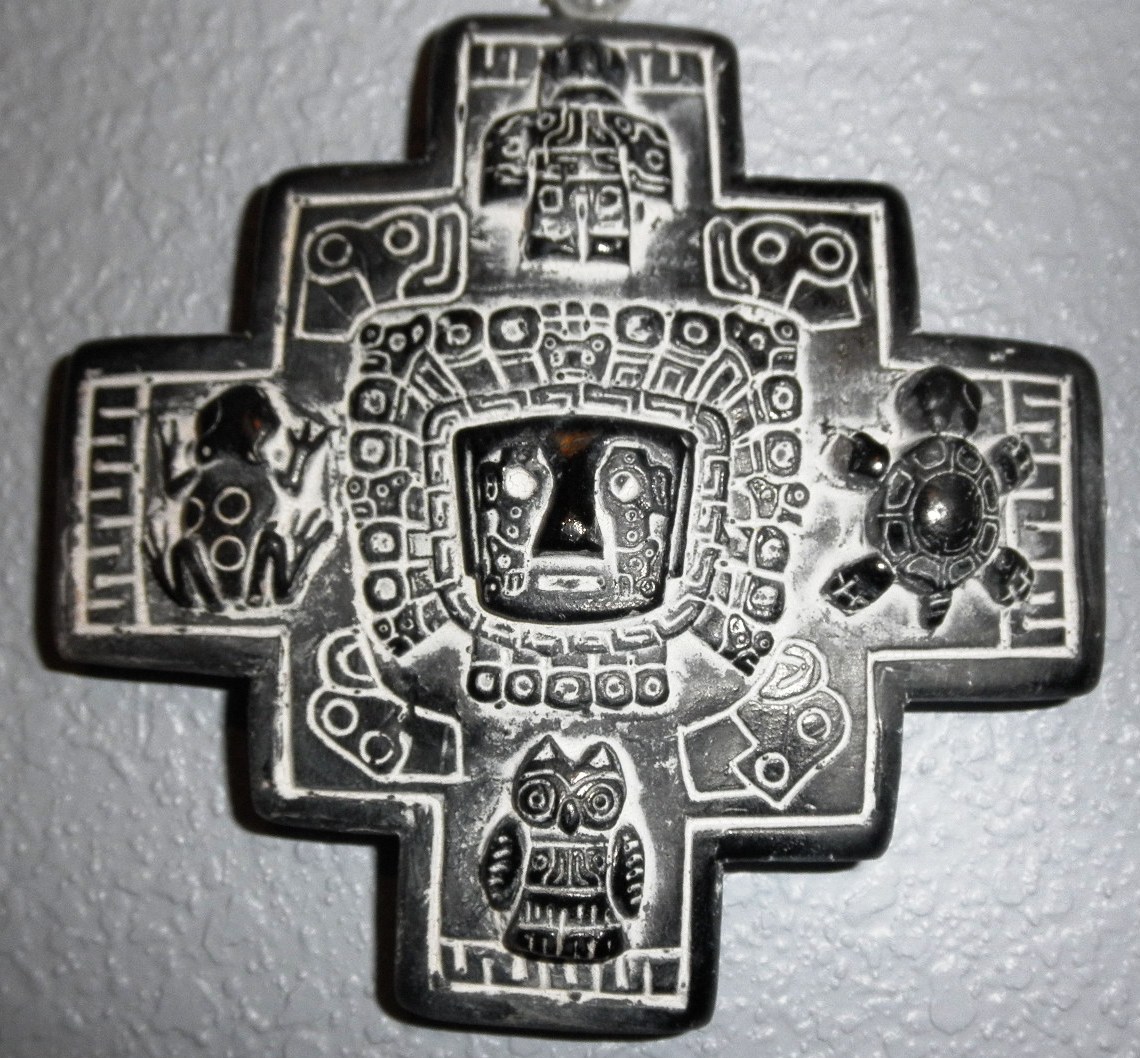
The chakana, also known as the Andean cross, is one of the most representative symbols of the indigenous cultures of the Andes. It is a stepped geometric figure with a symmetrical structure that frequently appears in archaeological contexts, textiles, ceramics, and other material expressions linked to pre-Hispanic societies in the Andean region. Its presence extends mainly to territories that were part of the ancient Andean world, such as Peru, Bolivia, Ecuador, northern Chile, and northwestern Argentina.
Over time, this symbol has been interpreted from different historical, cultural, and anthropological perspectives. Research on the Andean worldview and archaeological studies indicate that the chakana reflects concepts related to the organization of the universe, the relationship between the natural world and the social order, as well as certain astronomical observations developed by Andean civilizations.
[ez-toc]
Origin
The term “chakana” comes from Quechua, one of the most widely spoken indigenous languages in the Andes. Linguistic studies indicate that the word is associated with the idea of a ‘bridge’ or “ladder,” concepts related to the idea of connection or transit between different levels of the world. This interpretation appears in research on the Andean worldview conducted by academic institutions dedicated to the study of pre-Hispanic cultures.
The chakana is usually represented as a stepped cross with twelve points and a circular or square central space. Each of the steps is arranged in four arms that extend toward the cardinal points. This geometric structure has been analyzed by archaeologists and ethnohistorians, who consider that its design is not only decorative, but also a symbolic representation of the order of the universe according to Andean tradition.
The symbol is also related to astronomical observations made by pre-Hispanic peoples. Some interpretations maintain that the chakana could be linked to the Southern Cross constellation, visible in the southern hemisphere sky and known in various Andean cultures as a reference point for spatial and temporal orientation.
History and interpretation
Archaeological evidence indicates that figures similar to the chakana appeared in different pre-Inca cultures in the central Andes. Geometric motifs with stepped shapes have been identified in textiles, ceramics, and architectural structures belonging to societies such as Tiahuanaco, Wari, and other regional cultures that developed before the rise of the Inca Empire.
During the Inca period, between the 15th and 16th centuries, the symbol became more widespread within the territory of Tahuantinsuyo. The political and cultural expansion of the empire favored the circulation of iconography shared among various Andean regions. In this context, the chakana was part of a broader set of symbols that included geometric representations, animal figures, and patterns linked to nature.
The empire’s road system, known as Qhapaq Ñan, also reflects the importance of the concepts of connection and territorial articulation that some researchers relate to the symbolic meaning of the chakana. Although there are no direct written records from the Inca period that explain the symbol in detail, colonial chronicles and ethnohistorical studies allow us to reconstruct part of its cultural context.
After the arrival of the Spanish in the 16th century, many symbolic elements of Andean cultures underwent processes of transformation. Some symbols remained in community practices, while others were integrated into new cultural forms that emerged during the colonial period. In several cases, the chakana continued to be present in handicrafts, textiles, and ritual objects produced in Andean communities.
Connection between two worlds
Andean cosmology describes the universe as a system organized into different planes or levels of existence. In this conception, the world is traditionally divided into three main spaces: Hanan Pacha, associated with the upper world; Kay Pacha, corresponding to the earthly world; and Uku Pacha, linked to the inner or underground world. Various studies interpret the chakana as a symbolic representation of this structure of the cosmos.
In some interpretations, the four arms of the stepped cross reflect the spatial organization of the Andean world, while the center represents the point of connection between the different planes. This central point symbolizes the balance and articulation between natural and social forces. Likewise, the steps of the figure have been related to the idea of transit or communication between the different levels of the universe.
The chakana is also associated with the notion of territorial order in the Andes. The Tahuantinsuyo was organized into four regions or suyos, which extended from the city of Cusco to different parts of the empire.
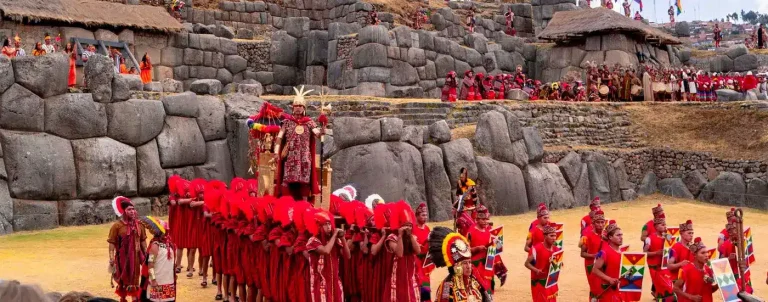
In addition to its cosmological dimension, the symbol appears in ritual and ceremonial practices of contemporary Andean communities. In certain cultural contexts, the chakana is used as a representation of balance between nature, society, and the spiritual world.
Cultura revaluation
Over the last few decades, the chakana has undergone a process of cultural revaluation in various Andean countries. This is related to the growing recognition of indigenous cultures and the interest in recovering symbols associated with the region’s historical identity.
Cultural institutions, museums, and research centers have incorporated the study of the chakana into programs dedicated to Andean cultural heritage. In Peru, Bolivia, and Ecuador, the symbol frequently appears in exhibitions, educational materials, and cultural outreach projects related to pre-Hispanic history.
Interest in the chakana is also linked to studies on cultural heritage and indigenous identity in South America. International organizations and universities have promoted research on the Andean worldview, cultural astronomy, and pre-Hispanic symbolic systems.
Questions and Answers
The Chakana, also known as the Andean Cross, is an ancient symbol representing the Andean worldview. It is typically depicted as a stepped cross with a central circle and symbolizes the connection between the three realms of existence in Andean cosmology: the upper world, the earthly world, and the underworld.
The word “chakana” comes from the Quechua language and is often interpreted as “bridge” or “ladder.” Archaeological evidence shows that symbols similar to the chakana appeared in several pre-Inca cultures and later became widely associated with the Inca Empire and the broader Andean civilization.
In Andean cosmology, the chakana represents the structure of the universe. The three levels are known as Hanan Pacha (upper world), Kay Pacha (earthly world), and Uku Pacha (inner or underworld). The center of the cross symbolizes the point of connection between these realms and the balance between nature, society, and spirituality.
Some researchers suggest that the chakana may be linked to astronomical observations, particularly the Southern Cross constellation. In the southern hemisphere, this constellation has long been used by Andean cultures as a reference point for orientation and seasonal cycles.
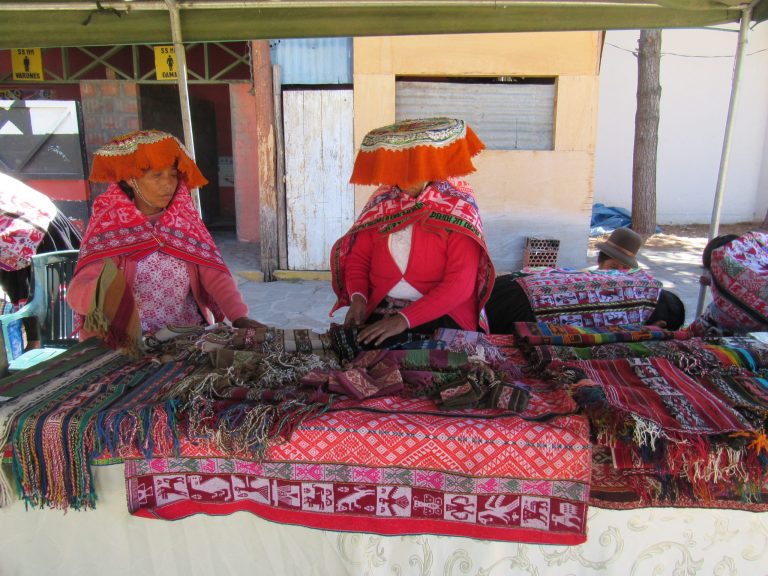
Yes. Visitors traveling through Peru—especially in the Cusco region and the Andes—can find the chakana symbol in textiles, handicrafts, architecture, and ceremonial art. It remains an important cultural symbol that reflects the heritage and spiritual traditions of Andean communities.